


Let’s be honest. When you are staring at a blank charge entry screen and a physician’s note that says “probable UTI, possible elderly confusion,” understanding ICD-10 coding guide is probably the last thing on your mind. After all, you just want to get the claim out the door and move on to the next patient.
However, here is the cold, hard truth that the top 10 ranking pages all agree on: The single biggest reason claims deny isn’t because the code doesn’t exist. Rather, it is because the coder didn’t truly understand the code they were using.
After dissecting, the pattern emerges crystal clear. The professional coders rank highly because they show you exactly where your money is leaking—truncation, laterality, and those tricky Excludes1 notes. Additionally, the giant code lookups rank well because they visually break down the alphanumeric soup into something your brain can actually process.
Above all, this guide is not a rehash of the Tabular List. Honestly, you can get that anywhere. Instead, this is the “why” behind the “what.” By the time you finish this page, you will understand ICD-10 code logic well enough to predict what an auditor is looking for before they even send the denial letter.
What Understanding ICD-10 Code Really Means in 2026
First and foremost, we need to clear up a massive point of confusion. When we talk about understanding ICD-10 code in the United States, we are almost always talking about ICD-10-CM (Clinical Modification).
For starters, there is another beast out there called ICD-10-PCS. That classification is strictly for inpatient hospital procedures. Consequently, unless you code for a facility operating room, you can forget about PCS for now. Your world is CM, plain and simple.
In essence, ICD-10-CM is the language of “why.”
CPT says: “I sewed a laceration.”
ICD-10-CM says: “I sewed it because a parrot bit him.” (Yes, there really is a code for parrot bite. W61.21XA).
Therefore, understanding ICD-10 code is really about telling a complete, defensible story. You are not just labeling a disease; rather, you are justifying the medical necessity of everything that happened in that exam room.
The Architecture of a Code: Reading the DNA
Every ICD-10-CM code is a string of 3 to 7 characters. On the surface, it looks random, but it actually follows strict DNA sequencing.
The Formula:
- Character 1: Alpha (The Chapter). This digit represents the body system. For instance, M is musculoskeletal, I is circulatory, and J is respiratory.
- Characters 2 & 3: Numeric (The Category). This section narrows it down significantly. For example, M62 is “Disorders of muscle.”
- Characters 4-6: Alpha/Numeric (The Etiology & Specificity). This is where the gold lives. Specifically, .82 tells us it is Rhabdomyolysis.
- Character 7: Extension (The Encounter). A stands for initial, D for subsequent, and S for sequela.
Real World Example:
Take S52.521A.
- S52 = Fracture of forearm.
- .521 = Torus fracture of lower end of right radius.
- A = This is the first time we are treating it.
If you cut that code off at S52.5, you just lost the laterality, the fracture type, and the encounter status. Honestly, that is not a code anymore. Instead, that is a denial waiting to happen.
The Specificity Trap: Why “Unspecified” Is Your Frenemy
Every top ranking resource screams the same message: Code to the highest level of specificity.
Nevertheless, let’s talk about what that actually means in the trenches.
The Rule:
If a code has 4 characters, you must use 4. Similarly, if it has 5, you must use 5. If you stop short, that is called truncation. Quite simply, it is an invalid code. As a result, the payer’s computer will eat your claim for breakfast.
The “Unspecified” Exception:
We are often told “never use unspecified codes.” However, that is not entirely true. You should use unspecified codes (like R10.9 for unspecified abdominal pain) when the documentation truly does not support a more specific diagnosis.
But here is the kicker. If the patient has left knee pain and the physician writes “left knee pain” in the note, you cannot use unspecified knee pain. Instead, you must use M25.562 (Pain in left knee). After all, the specificity exists in the note; therefore, the specificity must exist in the code.
The Excludes Landmines: Excludes1 vs Excludes2
This is where “understanding ICD-10 code” separates the rookies from the revenue cycle veterans. Sure, you can have the perfect five-digit code, but if you pair it with a code that has an Excludes1 note, the entire claim is invalid.
Excludes1: Mutually Exclusive.
In short, this means “these two conditions do not occur together.” For example, if you look at M62.82 (Rhabdomyolysis), there is an Excludes1 note for T79.6 (Traumatic ischemia of muscle). Consequently, you cannot bill both. It is strictly one or the other. Otherwise, the payer will assume you are trying to inflate the claim.
Excludes2: Separate Issues.
Conversely, this means “these are different conditions, and the patient can have both.” Therefore, you can code them together. For instance, you can code a fracture and a subsequent infection at the same time because the infection is a complication, not the fracture itself.
Quick Cheat Sheet:
- Excludes1 = RED LIGHT. Do not use these codes together under any circumstances.
- Excludes2 = YELLOW LIGHT. Proceed with caution, but you can absolutely link them.
The Annual Reset: Why October 1st Gives Everyone Anxiety
ICD-10 updates every fiscal year on October 1st.
This is not like CPT where changes happen in January. If you are still billing the 2025 code set on October 2nd, 2025, you are billing a dead language. In fact, the codes are technically “deleted” in the system. Unsurprisingly, the claim will reject.
The 2026 Update Snapshot:
The FY 2026 updates brought in 487 new codes. While chiropractors saw very few changes, Chapter 5 (Mental Health) got a massive facelift.
- Eating Disorders: We now have severity levels for Anorexia and Bulimia (F50.01-F50.25).
- Adult Diagnoses: Conditions historically associated with children, like Pica and Rumination Disorder, now have specific adult codes (F50.83, F50.84).
- Epilepsy: New codes for KCNQ2-related epilepsy (G40.84) recognize specific genetic mutations.
If you are coding for psychiatry or neurology and you missed this, you are quite simply leaving money on the table.
Laterality: Left, Right, or Denied
Payers love laterality. After all, it proves you looked at the correct body part.
If the code description includes “right” or “left,” you must select the appropriate side. Likewise, if the patient has bilateral issues, look for a “bilateral” code. If one doesn’t exist, you code left and right separately.
The Dominance Rule:
For neurology and musculoskeletal conditions affecting limbs, you often need to know if the affected side is dominant or non-dominant.
- Default Rule: Right side = Dominant. Left side = Non-dominant.
- Ambidextrous: Default to dominant.
If you code a right-handed patient’s left arm fracture as “dominant,” you have created a clinical inconsistency. Consequently, the payer may question why the “dominant” arm is not being treated aggressively enough.
The Documentation Connection: Garbage In, Garbage Out
Here is the secret that the top 0.1% of coders know: You cannot understand ICD-10 code logic if you do not understand the physician’s note.
Simply put, medical necessity is the bridge between the CPT code (what we did) and the ICD-10 code (why we did it). If that bridge is broken, the patient is technically responsible for the bill.
Common Breakdowns:
- Signs vs. Diagnosis: A patient has a cough. You do an x-ray. The x-ray shows pneumonia. You cannot bill the cough code (R05). Instead, you must bill the pneumonia code (J18.9). In other words, the diagnosis supersedes the symptom.
- Acute vs. Chronic: If the note says “acute on chronic CHF,” do not just pick the chronic code. Rather, you need the specific combination code (I50.33) for acute on chronic systolic heart failure.
- Denials like CO-24 and CO-253: These often hit when the diagnosis code does not match the procedure code. For example, billing an MRI of the brain (CPT) with a code for headache (R51) is perfectly fine. However, billing an MRI of the brain with a code for bunion of the foot? Instant denial (CO-24). Therefore, you must link the right diagnosis to the right line item.
The Internal Link Hub: Your Coding Library
Understanding the ICD-10 system is the foundation. However, the real power comes when you apply that understanding to specific conditions. Below is your internal library. Each link represents a specific diagnosis where the principles of specificity, laterality, and etiology come into play.
Musculoskeletal & Pain Codes
Osteoarthritis (OA) – M15–M19
Osteoarthritis is a degenerative joint disease caused by cartilage wear over time.
Documentation should specify the joint and type to avoid coding it as unspecified arthropathy.
Rhabdomyolysis – M62.82 / T79.6
Rhabdomyolysis is severe muscle breakdown that releases muscle proteins into the blood.
It can occur after intense exercise (exertional) or trauma and may lead to kidney injury.
Lumbar Radiculopathy – M54.16
Lumbar radiculopathy occurs when a nerve root in the lower spine becomes compressed.
It usually causes sharp pain, numbness, or tingling that radiates down the leg.
Pain in Right Knee – M25.561
This code identifies localized pain in the right knee joint.
Laterality must be documented to avoid using a general joint pain code.
Pain in Left Knee – M25.562
Used when a patient reports pain specifically in the left knee.
It helps document the exact joint involved for treatment and billing accuracy.
Neck Pain – M54.2
Neck pain refers to discomfort in the cervical region of the spine.
It can be caused by strain, poor posture, injury, or degenerative spine conditions.
Pain in Right Hand – M79.641
This code describes localized pain in the right hand.
It is used when the pain is present but the exact cause has not yet been diagnosed.
Pain in Left Hand – M79.642
Indicates pain specifically affecting the left hand.
The code captures symptoms before identifying an underlying condition like arthritis or injury.
Pain in Right Ankle – M25.571
Used when a patient has pain localized in the right ankle joint.
Often associated with sprains, overuse injuries, or degenerative changes.
Pain in Left Ankle – M25.572
This code documents pain in the left ankle region.
It helps differentiate the affected side for proper clinical documentation.
Cervical Pain – M54.2
Cervical pain refers to discomfort originating from the neck area of the spine.
It may result from muscle strain, degenerative disease, or nerve compression.
Pain in Right Shoulder – M25.511
This code describes pain localized in the right shoulder joint.
It is often linked to rotator cuff injury, bursitis, or arthritis.
Cervical Spinal Stenosis – M48.02
Cervical spinal stenosis is narrowing of the spinal canal in the neck region.
It can compress nerves or the spinal cord and cause pain, weakness, or numbness.
Pain in Left Hip – M25.552
This code is used for pain localized to the left hip joint.
In elderly patients, clinicians must rule out fractures or serious pathology.
Systemic & Metabolic Disorders
Hypercalcemia Secondary to Lymphoma – E83.52 + C81–C85
Hypercalcemia occurs when calcium levels in blood become abnormally high.
When caused by lymphoma, the cancer code is listed first followed by the metabolic disorder.
Hyponatremia – E87.1
Hyponatremia refers to abnormally low sodium levels in the blood.
It can cause confusion, seizures, or weakness and often occurs in hospitalized patients.
Hypokalemia – E87.6
Hypokalemia means low potassium levels in the body.
It may lead to muscle weakness, arrhythmias, and fatigue.
Hypomagnesemia – E83.42
Hypomagnesemia indicates low magnesium levels in the bloodstream.
It can affect nerve and muscle function and often occurs with malnutrition or kidney issues.
Hypernatremia – E87.0
Hypernatremia occurs when sodium levels are excessively high.
It is usually caused by dehydration or impaired water balance.
Hypocalcemia – E83.51
Hypocalcemia refers to low calcium levels in the blood.
Symptoms may include muscle cramps, numbness, and cardiac rhythm abnormalities.
Acute Kidney Injury (AKI) – N17.-
Acute kidney injury is a sudden decline in kidney function.
It can be caused by dehydration, infection, medications, or reduced blood flow to the kidneys.
Cardiovascular & Respiratory
Abnormal EKG – R94.31
This code indicates abnormal electrical findings on an electrocardiogram.
It is a sign that requires further evaluation for heart disease or electrolyte problems.
Acute Hypoxic Respiratory Failure – J96.01
This condition occurs when the lungs cannot supply enough oxygen to the blood.
It is often caused by severe pneumonia, lung disease, or respiratory distress.
Venous Insufficiency – I87.2
Venous insufficiency happens when leg veins cannot return blood efficiently to the heart.
It can lead to swelling, skin changes, and leg ulcers.
Gastrointestinal & Genitourinary
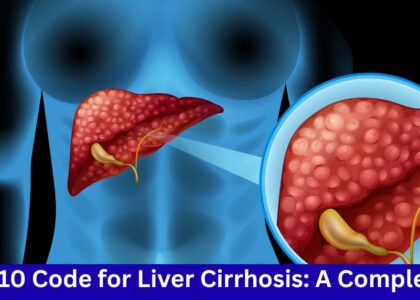
Liver Cirrhosis – K74.6
Cirrhosis is long-term scarring of the liver caused by chronic damage.
It may result from alcohol use, hepatitis, or fatty liver disease.
Overactive Bladder – N32.81
Overactive bladder causes sudden urges to urinate and frequent urination.
It occurs due to involuntary bladder muscle contractions.
Dysuria (Burning with Urination) – R30.0
Dysuria refers to painful or burning sensations during urination.
It commonly occurs with urinary tract infections or bladder inflammation.
Renal Stone – N20.0
Renal stones are hard mineral deposits formed in the kidneys.
They can cause severe flank pain, nausea, and blood in urine.
Chronic Constipation – K59.00
Chronic constipation is persistent difficulty passing stools.
It may be related to diet, medications, neurological diseases, or lifestyle factors.
Mental Health & Neurology
Altered Mental Status (AMS) – R41.82
Altered mental status refers to confusion, disorientation, or reduced awareness.
It is a symptom that requires investigation for underlying causes.
Postherpetic Neuralgia – G53.0
Postherpetic neuralgia is long-lasting nerve pain following a shingles infection.
The pain continues even after the rash has healed.
Post-Traumatic Stress Disorder (PTSD) – F43.1
PTSD is a mental health disorder triggered by experiencing or witnessing trauma.
Symptoms include flashbacks, anxiety, nightmares, and emotional distress.
Panic Disorder – F41.0
Panic disorder involves sudden episodes of intense fear or panic attacks.
These attacks may include chest pain, rapid heartbeat, and shortness of breath.
Suicidal Ideation – R45.851
Suicidal ideation refers to thoughts about harming oneself.
It is coded as a symptom and must be linked with the underlying mental health diagnosis.
Cancer & History Codes
Lung Cancer – C34.-
This code identifies malignant tumors in the lungs.
Specific subtypes depend on cell type such as adenocarcinoma or small-cell carcinoma.
History of Prostate Cancer – Z85.46
This code indicates a patient previously had prostate cancer but is now in remission.
It is used when there is no active disease or ongoing treatment.
History of Breast Cancer – Z85.3
Used when a patient has a past history of breast cancer.
Laterality (right or left) may be documented depending on the medical record.
Eye, Ear & Miscellaneous
Blurred Vision – H53.8
Blurred vision describes reduced visual clarity without a specific eye disease diagnosis.
It can occur due to refractive errors, fatigue, or underlying eye disorders.
Posterior Vitreous Detachment – H43.81
This condition occurs when the vitreous gel separates from the retina.
Patients often notice floaters or flashes of light.
Obstructive Sleep Apnea – G47.33
Obstructive sleep apnea causes repeated airway blockage during sleep.
It leads to snoring, poor sleep quality, and daytime fatigue.
Glaucoma Unspecified – H40.9
Glaucoma is a condition that damages the optic nerve due to high eye pressure.
This unspecified code is used when the exact glaucoma type is not documented.
Adult Failure to Thrive – R54
Adult failure to thrive describes significant weight loss and functional decline in elderly patients.
It is often associated with chronic disease or poor nutritional intake.
Asthenia – R53.1
Asthenia refers to generalized weakness or lack of physical strength.
It can occur with infections, chronic disease, or fatigue disorders.
Muscle Weakness – M62.81
This code describes reduced muscle strength without a specific cause.
It may occur with neurological disease, injury, or prolonged inactivity.
Lab Findings
Elevated Troponin – R79.89
Elevated troponin indicates damage to heart muscle cells.
It is a laboratory finding that requires evaluation for heart attack or myocarditis.
Leukocytosis – D72.829
Leukocytosis means an increased white blood cell count.
It usually occurs due to infection, inflammation, or bone marrow disorders.
Transaminitis – R74.8
Transaminitis refers to elevated liver enzymes in blood tests.
It signals liver irritation but does not identify the exact cause.
Elevated D-dimer – R79.1
Elevated D-dimer indicates increased blood clot breakdown activity.
It is used to help detect conditions like deep vein thrombosis or pulmonary embolism.
Administrative Denial Codes
CO-24 Denial Code
CO-24 indicates a claim was denied due to missing prior authorization.
It is an administrative issue rather than a medical diagnosis.
CO-253 Denial Code
CO-253 occurs when services are improperly unbundled in billing.
Correct coding and proper documentation can prevent this denial.
Additional Codes to Complete Your Library
Conclusion: Coding is Storytelling
At the end of the day, understanding ICD-10 code is about respecting the narrative of the patient encounter. The physician writes the story. The coder translates it into alphanumeric language. Finally, the payer reads it and decides if it makes sense.
If the story is missing chapters (truncation), contradicts itself (Excludes1 violations), or misidentifies the hero (wrong laterality), the story gets rejected. Plain and simple.
Stay specific. Stay updated. And when in doubt, query the provider. Because a clean claim is not just about getting paid. Ultimately, it is about proving that you delivered the right care, to the right patient, for the right reason.
Frequently Asked Questions
Q: What is the difference between ICD-10 and ICD-10-CM?
A: ICD-10 is the global mortality classification system published by WHO. In contrast, ICD-10-CM is the U.S. clinical modification used specifically for diagnosis coding in all healthcare settings. When we say “ICD-10 codes” in America, we almost always mean ICD-10-CM.
Q: Why did my claim deny for a “truncated code”?
A: A truncated code means you submitted an incomplete code. For example, you submitted “M62.8” instead of “M62.82.” ICD-10 codes require the exact number of characters as specified in the Tabular List. Submitting a partial code is like writing a check without signing it.
Q: Can I use an unspecified code if I am waiting on lab results?
A: Yes, but only for the initial encounter. Once the final diagnosis is confirmed, you should code the specific condition. For outpatient encounters, simply code what is known at the time of the visit.
Q: What is the “Excludes1” note and why does it matter?
A: An Excludes1 note means the two conditions cannot logically occur together. Therefore, you cannot code them on the same claim. For example, you cannot code congenital and acquired absence of the same organ together. Payers use these edits to flag impossible combinations.
Q: How often do ICD-10 codes update?
A: ICD-10-CM updates annually on October 1st. You must use the new code set for any date of service on or after October 1. You cannot use the previous year’s codes for dates after the cutoff.
Q: What is the “Code First” note?
A: A “Code First” note instructs you to sequence an underlying etiology before the manifestation code. For example, with dementia in Alzheimer’s disease, you code the Alzheimer’s (G30.-) first, then the dementia (F02.8-).
Q: How do I code pain for a patient who is ambidextrous?
A: According to official guidelines, if the patient is ambidextrous and the affected side is documented, you should default to coding the affected side as dominant.
Q: What is the penalty for overcoding or unbundling?
A: Over coding (billing a higher level than supported) and unbundling (splitting a single procedure into multiple codes) are considered fraudulent if intentional. Consequently, they can trigger audits, recoupment, and civil monetary penalties.